
How the Animation Industry Transformed with AI in 2025
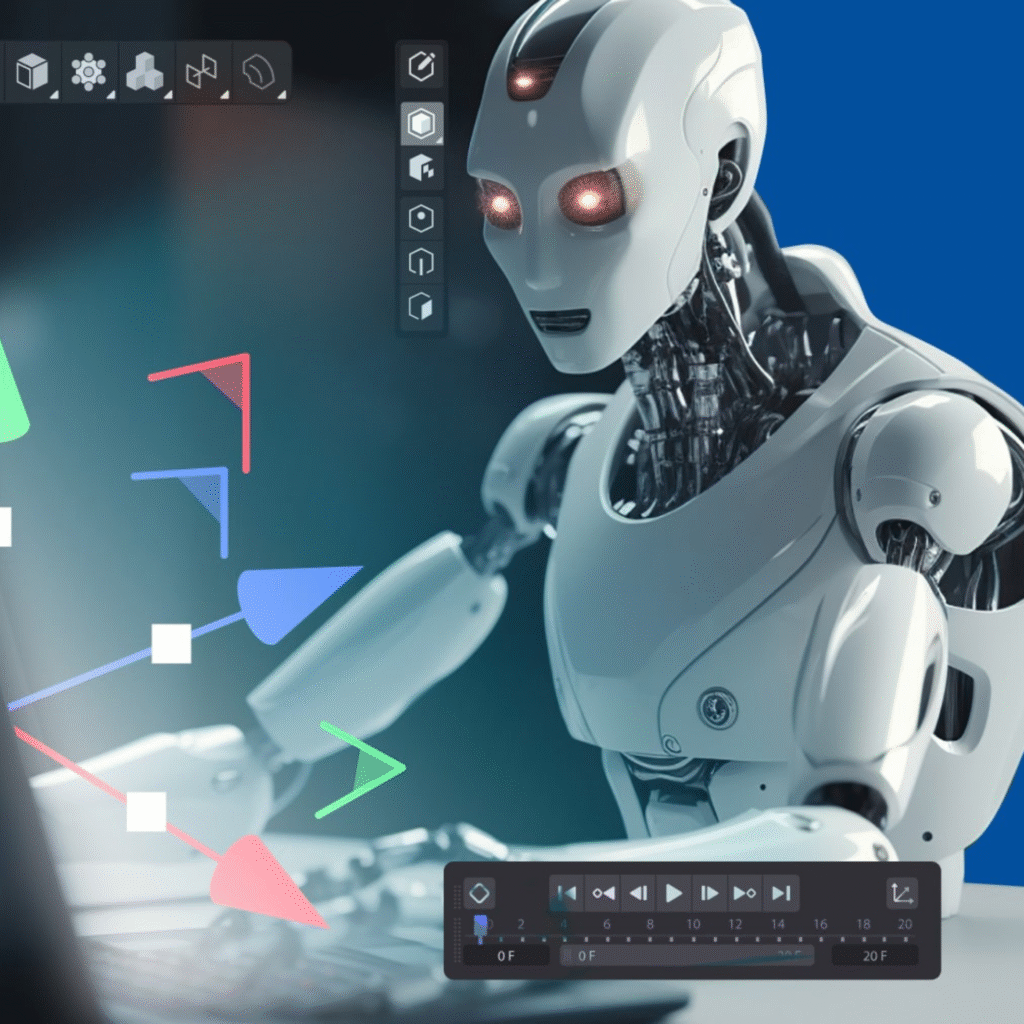
The year 2025 marked a groundbreaking shift in the global animation industry. Artificial Intelligence (AI), which was slowly making its presence felt in previous years, finally took center stage by transforming workflows, boosting creativity, reducing production time, and opening completely new possibilities for animators. From character design and motion capture to automated rendering and AI-driven storytelling, animation today looks and functions entirely differently than it did even a few years ago. This transformation has empowered small creators, indie studios, educators, and large production houses alike. Instead of replacing artists, AI has become a powerful creative companion, enhancing human imagination, streamlining technical processes, and delivering faster, higher-quality animated content to the world. How AI Technology Became the Backbone of the Animation Industry in 2025 This section explains how AI systems evolved into essential tools used across every stage of animation production—from concept creation to post-production. 1. AI-Powered Pre-Production Revolution AI reshaped pre-production processes by making ideation, research, and planning faster and more efficient. • Automated Concept Generation In 2025, AI tools became capable of generating early-stage sketches, story ideas, concept art, and visual tone references within seconds. This helped studios explore multiple creative directions quickly, saving days or weeks during concept development. • Smarter Scriptwriting Assistance AI-driven writing tools began assisting writers in generating dialogues, plot developments, character arcs, and world-building ideas. These tools analyzed thousands of stories, helping writers avoid clichés and craft unique, emotionally aligned narratives. • Rapid Storyboard Creation AI could convert scripts into structured storyboards with rough sketches, character poses, and camera angles. Animators then refined these drafts, significantly shortening pre-production cycles. AI as a Creative Partner for Animators and Artists This section describes how AI supported artists creatively, allowing them to work faster without limiting their artistic originality. 1. AI-Enhanced Character Design AI tools in 2025 allowed artists to instantly generate multiple variations of characters—different outfits, hairstyles, expressions, and proportions—while retaining unique artistic styles. This helped designers test multiple creative directions without manual redrawing. 2. Style Transfer Technology for Visual Consistency AI algorithms enabled automatic style transfer, meaning artists could apply a specific artistic style across hundreds of frames. Whether the style was hand-drawn, watercolor, anime, or 3D realism, AI maintained consistency while significantly reducing manual workload. 3. Intelligent Background Creation Instead of drawing every background from scratch, artists used AI to generate landscapes, futuristic cities, interiors, or fantasy worlds based on text prompts. The generated scenes served as detailed references or even final render-ready assets. AI-Driven Animation Production: Faster, Sharper, and More Efficient This section highlights how AI changed the middle stage of production through automation and motion intelligence. 1. Automated 2D Animation Workflows AI tools could interpret rough sketches and automatically animate them. Frame-by-frame animation, which previously required immense labor, became faster due to AI in-betweening, which generated clean intermediate frames automatically. 2. Real-Time 3D Motion Capture Using AI Sensors In 2025, AI-powered mocap systems required no expensive suits. Creators used smartphone cameras or webcams to capture human movement in real time. AI then translated these motions into smooth 3D animations, making professional animation accessible to all. 3. AI-Assisted Lip Sync & Facial Animation Previously time-consuming, lip-syncing became fully automated. AI could analyze voice recordings, detect emotion, and animate facial expressions that perfectly matched the vocal tone. This dramatically improved animation realism and production speed. 4. Intelligent Physics and Movement Simulation AI simulations handled hair movement, cloth dynamics, water flow, explosions, and environmental effects. Artists no longer needed to manually animate complex physics—AI produced natural-looking interactions automatically. How AI Transformed Rendering and Post-Production This section explains how final output improved using powerful AI-based enhancements. 1. AI Rendering Engines AI-based renderers in 2025 could process frames much faster than traditional software, reducing rendering time from hours to minutes. This allowed studios to test multiple lighting options, angles, and textures without waiting for long render cycles. 2. Smart Upscaling and Quality Enhancement AI upscaling upgrades low-resolution or rough animation frames to high-quality 4K or even 8K visuals. Studios saved time and saved on GPU costs while achieving cinematic output. 3. Error Detection and Scene Cleanup AI tools automatically detected animation errors, inconsistent frames, broken textures, or lighting mismatches. This significantly reduced post-production editing time and ensured cleaner final results. AI’s Impact on Animation Jobs and Creative Careers in 2025 This section covers how AI affected the workforce and what it meant for future careers in animation. 1. More Demand for AI-Skilled Animators Animators who learned to work with AI tools found themselves in high demand. Studios actively hired artists who could blend traditional skills with AI-assisted workflows. 2. New Career Roles Emerged 2025 introduced new job profiles like: AI Animation Supervisor – oversees AI-driven workflows Prompt Artist – writes prompts to generate accurate visuals AI Story Architect – uses narrative AI to structure stories AI Motion Specialist – fine-tunes AI-generated movement These new roles proved that AI did not replace artists—it created new opportunities. 3. Increased Creative Freedom for Small Studios Small animation studios and freelancers benefited the most. AI removed many technical barriers, letting independent creators produce high-quality films, ads, and series without large teams or costly equipment. How AI Personalized Animation for Audiences in 2025 With AI, animation became interactive, adaptive, and personalized for viewers. 1. Viewer-Specific Animated Content AI allowed platforms to customize animation based on user behavior—like changing character expressions, editing background colors, or modifying story difficulty levels for children. 2. AI-Powered Interactive Animation Interactive shows using AI allowed viewers to choose story directions, control characters, or even insert themselves as animated avatars inside episodes using face scanning. 3. Real-Time Localization and Dubbing AI translated dialogues into multiple languages while maintaining lip sync, accents, and emotional tone. This made global distribution faster and helped studios reach wider audiences. AI in Animation Education and Training in 2025 This section explains how AI changed skill learning for students and professionals. 1. Virtual Animation Mentors AI-powered mentors guided students step-by-step, corrected mistakes, suggested improvements, and provided real-time feedback during project creation. 2. Automated Practice